
What is an HSP?
Highly Sensitive Persons or HSPs are 15 to 20% of the population who feel keenly, process deeply, pick up on subtleties, and often have a heightened level of awareness and empathy beyond the majority of people.
Four indicators of HSP are:
- Depth of processing
- Awareness of subtleties
- Vulnerability to overstimulation
- A tendency to be emotionally reactive as well as very empathic.
This is not a disorder, but a biologically based temperament. It is a trait with pros and cons. But in our noisy, fast-paced culture, HSPs are often viewed as an anomaly, criticized, and misunderstood. The same trait that makes them more apt to be kind, creative, and spiritual also makes them more susceptible to depression and anxiety. Approximately 50% of people seeking mental health support are HSPs, yet the current system does not work well for many of them.
Why will a place like CATHARSIS be a game-changer for HSPs?
CATHARSIS strives to serve Highly Sensitive People. CATHARSIS will be the first mental healthcare center that is specifically by and for HSPs. Since HSPs are so powerfully affected by their environment, having a place that is small-ish, cozy, creative, and beautiful will be an important factor in their healing journey.
CATHARSIS Nashville will treat HSPs with mental distress ranging from mild (stress/anxiety/depression) to severe (psychosis/bipolar/schizophrenia).
Why are we passionate about serving HSPs?
HSPs constitute an invisible minority and are more vulnerable to mental “illnesses,” yet have gifts and potential such as empathy, creativity, a tendency to pause before acting, and to consider long-term effects of their choices.
HSPs are keenly affected by positive stimuli as well as negative. They respond well to healing interventions and environments, but they can be overwhelmed in clinical environments. Hence a place like CATHARSIS, built around beauty, gentleness, creativity, and care, is important for promoting mental care for HSPs. Especially, since Nashville is home to many HSP artists who respond well to arts-based therapy.
The CATHARSIS model seeks to redefine how mental healthcare supports HSPs by:
- Training counselors to recognize and respond to HSP traits
- Designing safe, nurturing therapeutic spaces
- Fostering social connection through peer groups
- Elevating cultural awareness of high sensitivity as a strength
How can I tell if me or my spouse, family member, friend is an HSP?
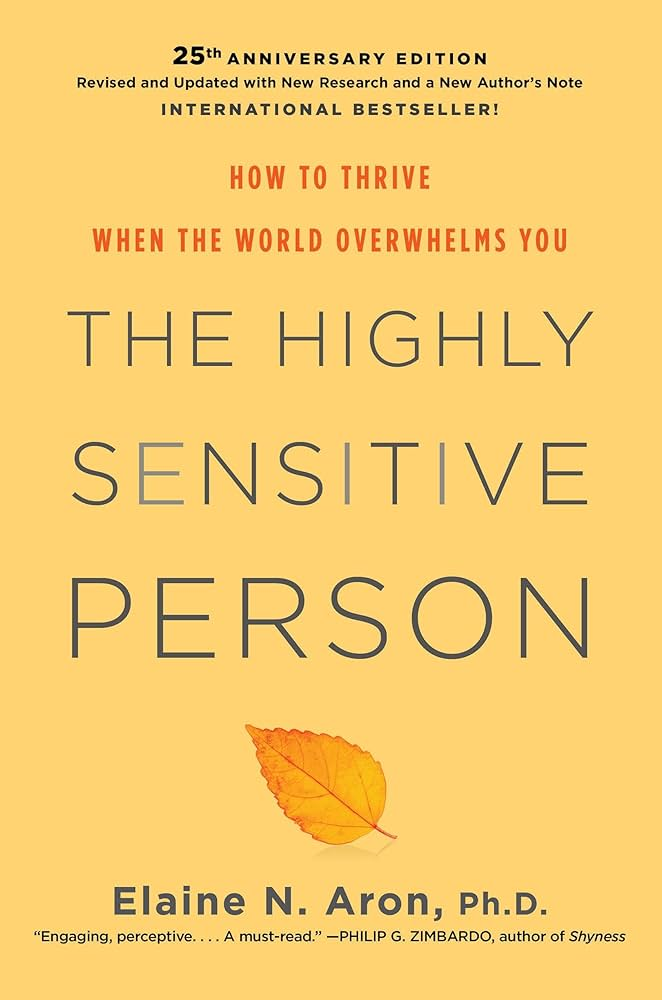
The easiest way to tell is to take this 5-minute self-test, or guess how the person you’re thinking of would answer the questions. Also, check out the book The Highly Sensitive Person by Dr. Elaine Aron.
More Information about HSPs
Since Dr. Elaine Aron’s groundbreaking research in the 1990s, HSPs—Highly Sensitive Persons—have moved from relative obscurity into the realm of mainstream media.
This is true of both people and animals! It seems there is a creative-evolutionary advantage to having a minority of each species who feel more deeply, notice more keenly, choose more thoughtfully. HSPs are much more intensely affected by our environments than non-HSPs, meaning that they tend to really flourish in healthy situations and really suffer in unhealthy situations. HSPs’ nervous systems are more vulnerably calibrated than the norm. Meaning that their threshold for becoming overstimulated is lower than in others’.
The technical name for HSP (Highly Sensitive Personality) is SPS, which stands for Sensory Processing Sensitivity and is the search term to use in scientific journals. It is thought to have a genetic basis and is different from the kind of acute sensitivity that people experience when they have been traumatized (though of course the two can overlap).
What is transliminality?
According to the Australian psychologist Michael Thalbourne (1955-2010), who created the term, transliminality is “the hypothesized tendency of psychological material to cross (trans-) thresholds (limin-) into and out of consciousness.”
Transliminality involves nine different aspects:
- Absorption
- Creative personality
- Dream interest & interpretation
- Fantasy-proneness
- Hyperaesthesia (heightened senses)
- Magical ideation
- Manic-like experience
- Mystical experience
- Paranormal belief & experience
There is overlap with HSP and transliminal people, and they often will both have an artistic temperament.